Case Study /
XING: Social Interactions
Reshaping social interactions across Germany's largest professional network
Product Design /Cross-Platform Plugin /B2C
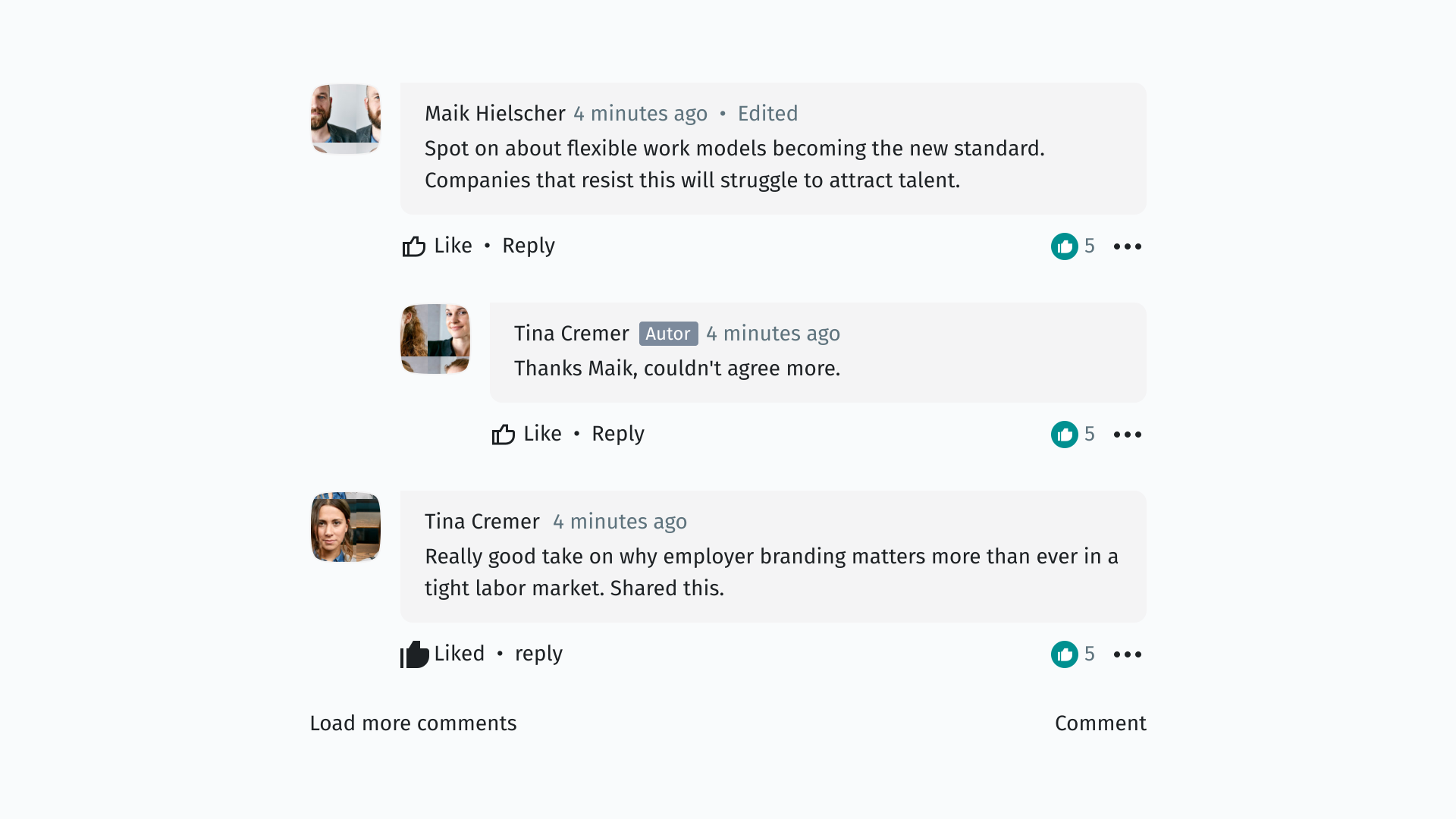
XING had four teams building four separate versions of the same social features. As the sole designer, I consolidated them into a unified cross-platform plugin, growing user contributions by 10% across the network.
Context & Challenge
Company Context
XING was Germany’s leading professional network. The product strategy focused on revitalizing network engagement, with clear targets to increase daily, weekly, and monthly active users. Social interactions represented a primary lever for engagement, but fragmented infrastructure slowed cross-platform execution.
Multiple product squads had developed autonomous feature sets over several years. This decentralized architecture resulted in divergent systems for handling social interactions that appeared similar on the surface but behaved inconsistently across surfaces.
The Problem
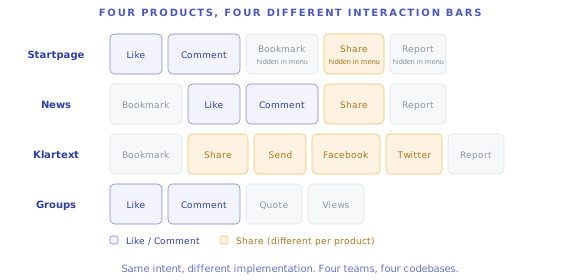
Across four core areas (Startpage, News, Klartext, and Groups), each squad maintained an independent codebase for social interactions. The fragmentation was visual and functional: inconsistent icon sets, mismatched button heights, and divergent modal flows. Sharing a post on the Startpage differed from sharing an article in News, even when both sent content to the same chat endpoint. Users lacked a visual preview of shared links. In a professional network where personal reputation is tied to every interaction, unpredictable behavior eroded user confidence.
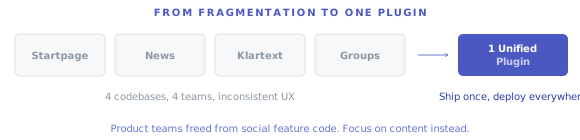
Maintaining four separate codebases also increased development overhead. Shipping a single platform enhancement, such as a new messaging channel, required four independent implementations.
Challenges
- Inconsistent interaction patterns across web and mobile surfaces: divergent icon sets, mismatched tap targets, and conflicting modal flows
- User hesitation caused by absent link previews and unpredictable post visibility
- Four independent codebases creating redundant maintenance overhead for product squads
- Slow release cycles where new communication channels required custom implementation in each product
- Absent cross-product telemetry to measure contribution health uniformly
- High engagement targets (DAU, WAU, MAU) constrained by fragmented legacy systems
Goals
- Consolidate social interactions into a single cross-platform plugin
- Increase user engagement and contribution rates in line with company strategy
- Enable simultaneous feature deployments across web, iOS, Android, and mobile web
- Eliminate redundant maintenance work so product squads could focus on domain-specific features
- Establish unified telemetry to track social interactions across all platform surfaces
Discovery & Research
Research Methods
I initiated a heuristic audit across all four products, documenting inconsistencies in comment inputs, action bars, and interaction states. I conducted user interviews and analyzed session logs to identify friction points in the contribution flow. We also benchmarked interaction models across established communication platforms (Facebook, WhatsApp, Slack, LinkedIn, Twitter) to evaluate familiar mental models for commenting and content sharing.
Key Findings
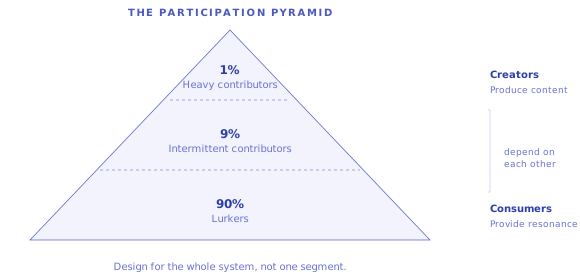
Finding 1: The Participation Pyramid. Platform engagement followed a 90/9/1 distribution:
- 90% passive consumers (reading and browsing)
- 9% intermittent contributors (reactions and occasional comments)
- 1% heavy contributors (original posts and regular discussion moderation)
These tiers operate as an interdependent loop. Heavy contributors author the posts that passive users consume, but require visible feedback to remain active. Passive users supply that feedback through low-friction reactions. Lowering the interaction barrier for the 90% directly incentivizes the 1%.
Finding 2: Contextual Roles. Users maintained clear boundaries between professional and private communications. Interacting in a professional context required explicit visibility controls and predictable publishing states.
Finding 3: Safety and Transparency. Contribution rates depended on clear visibility feedback. Missing link previews and inconsistent privacy states caused hesitation before posting.
Competitive Analysis
Evaluating comment and reaction patterns across WhatsApp, Slack, LinkedIn, and Facebook highlighted how progressive disclosure lowers barrier to entry. Structuring interactions into an engagement ladder: moving users from lightweight reactions to contextual comments and original posts: informed our architectural direction.
Design Process
Strategic Direction
Before a dedicated product team existed for this initiative, I led an internal investigation mapping cross-platform fragmentation and maintenance costs. The core recommendation was a modular social plugin: a single shared component maintained centrally, allowing consuming teams to focus on domain content. Leadership formed a dedicated squad around this recommendation.
The participation pyramid defined the interaction strategy. Heavy contributors needed advanced authoring tools such as mentions, hashtags, and threaded replies. Casual users needed frictionless reaction points. Designing for the complete loop ensured that increased reaction volume gave creators immediate social validation.
Design Decisions
Decision 1: Unified Plugin Architecture I advocated for a single cross-platform plugin over shared design guidelines with individual squad builds. A shared guideline model would have preserved separate codebases and prevented synchronized releases. The plugin model centralized maintenance and allowed feature updates to deploy everywhere at once.
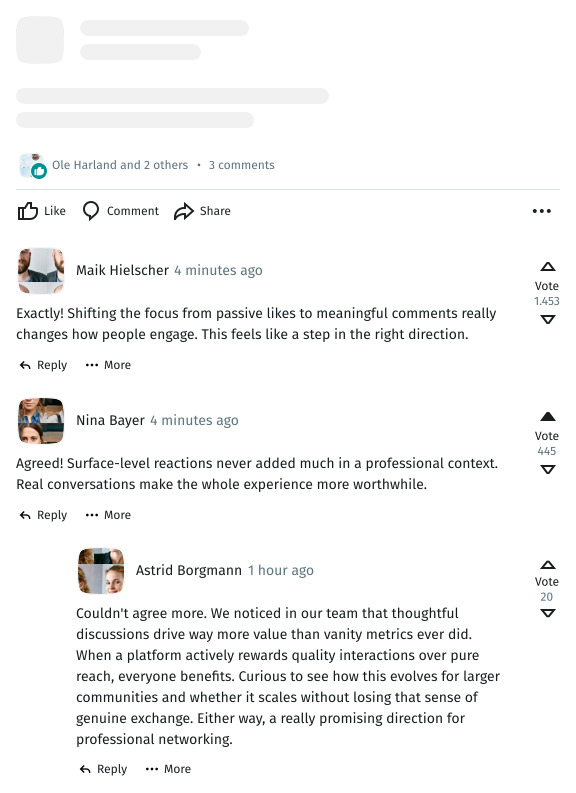
Early in discovery, we tested Reddit-style voting mechanics to surface relevant debate in News and Klartext. We discarded the pattern: voting added unfamiliar mechanics that conflicted with professional networking conventions. The exploration reinforced our focus on established, low-friction interaction models.
Decision 2: Progressive Disclosure in Comment Input
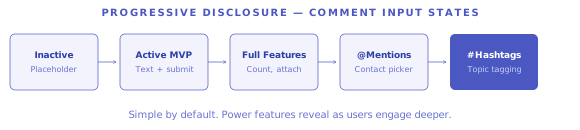
I structured the comment component into five progressive states: Inactive, Active MVP, Full Features, Mention Mode, and Hashtag Mode. The default state presents an uncluttered input field, while advanced tools (character counters, mention pickers, tag selectors, attachments) reveal themselves only as the user engages.
Decision 3: Engagement Ladder
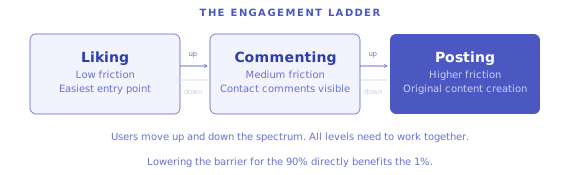
The engagement ladder defined the interaction hierarchy across three steps:
- Liking (Low Friction): Immediate visual feedback and notification triggers.
- Commenting (Medium Friction): Highlighting peer responses and providing contextual placeholder prompts.
- Posting (High Friction): Clear authoring prompts and immediate distribution previews.
The framework mapped how different interaction types serve specific user segments within the participation pyramid.
System & Pattern Thinking
I established standardized interaction patterns for the comment and reaction experience across iOS, Android, web, and mobile web. The design integrated with existing design system primitives while introducing new cross-platform patterns for mentions, link previews, and threaded conversations.
Solution
Overview
A unified social interaction plugin deployed across all XING products, replacing four legacy implementations with a single system for liking, commenting, and sharing.
Unified Interaction Bar
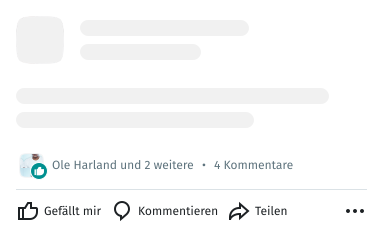
A standardized interaction bar providing consistent typography, iconography, and responsive states across all consuming products. Real-time counts for likes and replies provide immediate social proof.
Confident Contribution
A progressive comment input designed to reduce contribution friction. The initial state displays only the input field and submit button, keeping the interface focused. Rich previews generate link metadata before publishing, giving users direct visibility into how content will render.
Structured Discussions
Threaded replies that organize conversations into clear hierarchies rather than flat chronological feeds.
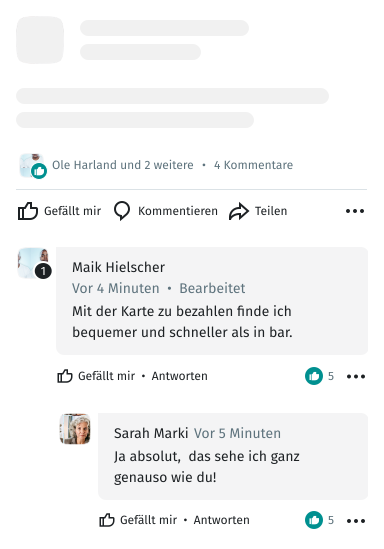
Direct Interaction
Contextual @mentions that allow users to tag colleagues directly into discussions. The mention dropdown queries the user’s direct network first, streamlining professional collaboration.
Implementation & Iteration
MVP & Phasing Strategy
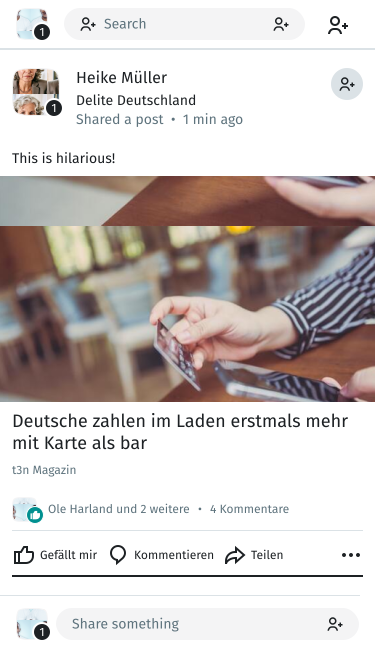
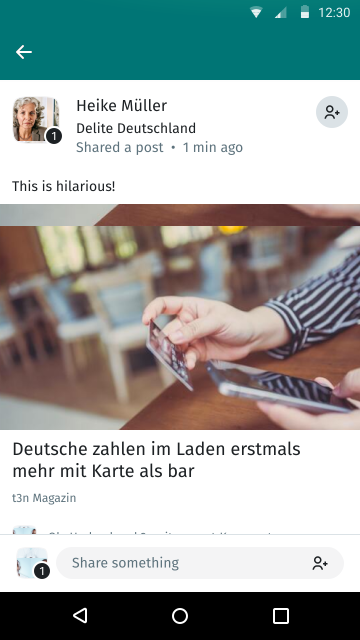
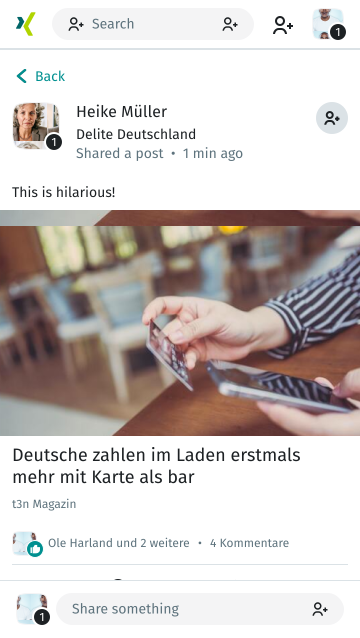
We launched the unified plugin on the Startpage first because its high traffic volume provided rapid telemetry and validation cycles.
MVP objectives:
- Validate baseline engagement: Confirm that consolidating legacy features caused no drop in core interaction metrics.
- Establish unified telemetry: Aggregate cross-product interaction data into a single analytics pipeline for the first time.
- Build the extensible foundation: Prepare the architecture for threaded replies, mentions, and social proof counters across all platforms simultaneously.
Following baseline validation on Startpage, we rolled out threaded discussions and mention support to News, Klartext, and Groups.
Collaboration & Alignment
As the sole product designer on the core plugin squad, I managed alignment across multiple consuming product teams. I ran weekly sync sessions in the company-wide UX guild to review incoming components, integration timelines, and technical constraints. This cross-team coordination built upon the organizational groundwork I had previously established while designing XING’s notification systems.
Post-Launch Iteration
Post-launch behavioral data confirmed that visible engagement counters and highlighted peer comments increased reaction rates among passive readers. Subsequent releases introduced finer notification granularity and inline media previews.
Outcomes & Impact
| Metric | Result |
|---|---|
| User contributions | +10% increase over 6 months |
| System consolidation | 4 separate codebases consolidated into 1 unified plugin |
| Feature deployment | Simultaneous cross-platform releases enabled |
| Maintenance overhead | Product squads freed from legacy social feature maintenance |
Measurement context: Interaction metrics had previously been recorded in separate squad databases without unified definitions. Consolidating the plugin enabled the first platform-wide telemetry baseline. User contributions grew 10% across the platform over six months following deployment, driven by increased reaction volume and reduced posting friction.
“When sharing links on XING, I get a much better preview. This gives me confidence!”
“I can now share posts on XING beyond my network and build additional reach!”
“Finally that feature is here.”
Organizational Impact
Consuming squads successfully integrated the shared plugin and decommissioned legacy social codebases, shifting development resources back to their core domain roadmaps. The project validated a shared plugin architecture model at XING, establishing a precedent for subsequent cross-product platform initiatives.
Learnings
The participation pyramid provided a strong structural model for product design, but the organizational challenge lay in the migration path. Unifying four divergent implementations required establishing a strict baseline before reintroducing product-specific customizations. This initial standardization created friction with squads who temporarily gave up tailored features.
In future platform initiatives, I would architect first-level extension points from day one. Allowing consuming squads to configure domain-relevant actions within a shared constraint system preserves team agency while maintaining core architectural integrity.
User contributions grew 10% because the system supported the complete interaction loop across both contributor tiers. Proving that connection was only possible because we established cross-product data infrastructure first.